

Contents
Most generators that won't start have a battery problem, a fuel supply problem (empty tank, clogged filter, air in the line) or an active alarm on the controller. Black smoke usually means overload, a blocked air filter or an injection fault. Before you call a technician, write down the message the controller shows.
Why won't my generator start?
Usually the battery is weak, fuel is not reaching the engine, or the controller is blocking the start. Check in this order: the screen, the emergency stop, the fuel, then the battery.
- An alarm is showing. When a safety device trips, the controller stops the set and refuses to restart it. On 24 of the 25 Perkins-engined models in our catalogue, the controller is a Deep Sea DSE6010. Photograph the message before you reset it: it is the first thing a technician needs. On small sets with a simple 3-in-1 or 5-in-1 display, there may be no message: check the oil level and the circuit breaker instead.
- The emergency stop is pressed. This button stays latched after use, often after cleaning or a service visit. Until it is released, the starter will not turn.
- The controller is in the wrong mode. In Stop it never cranks the engine. In Auto it waits for a remote start signal and does nothing without it. For a test, switch to Manual and press Start.
- Fuel is not getting through. Check the real level in the tank, the fuel valve and the look of the diesel. A clogged filter or water in the fuel blocks the supply. After running dry or a filter change, air gets into the line: the engine cranks but does not fire. You then need to bleed the line as the engine manual describes, or have a technician do it.
- The battery is weak. The starter turns slowly, clicks or does nothing, and the screen goes dark while cranking. The usual causes are a standby set left unused for weeks, loose or corroded terminals and a worn-out battery.
Avoid long cranking attempts one after another: they drain the battery and overheat the starter.
What starting equipment do some of our diesel sets have?
A replacement battery must have the same voltage (12 V or 24 V, depending on the set) and at least the capacity shown on the data sheet. For batteries, filters and other spare parts, send us the generator model. Examples from the data sheets:
| Generator | Rated power | Starting | Battery | Display or controller |
|---|---|---|---|---|
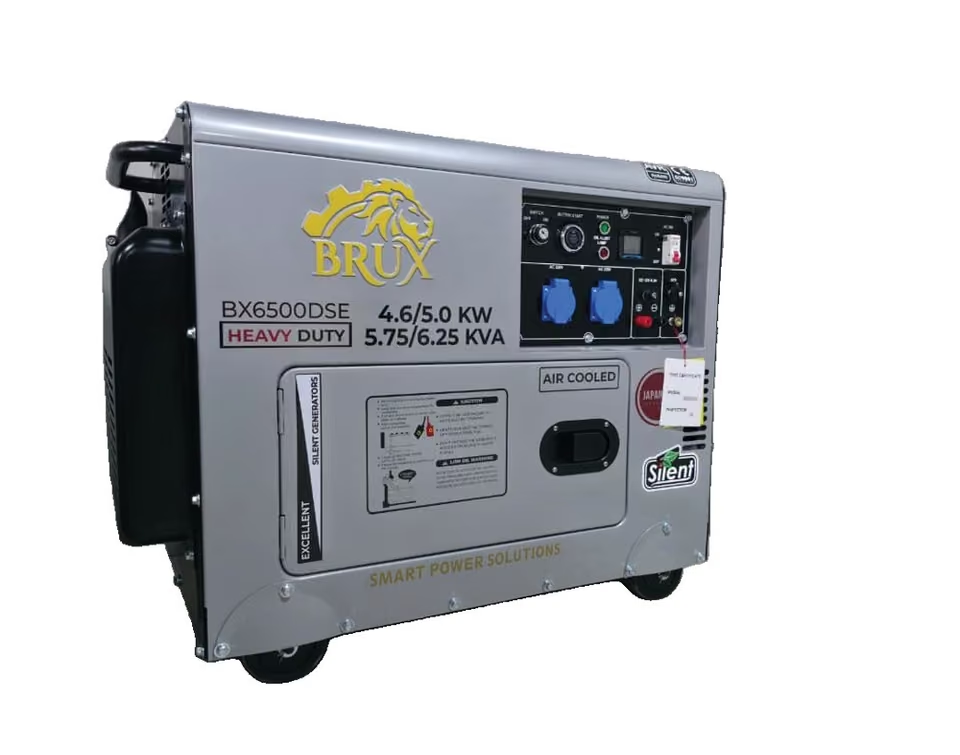
| Brux BX6500DSE | 5.75 kVA | electric, button and remote control | 30 Ah | 3-in-1 display |
| Brux BX7000DE | 6.25 kVA | electric | 30 Ah | 3-in-1 display |
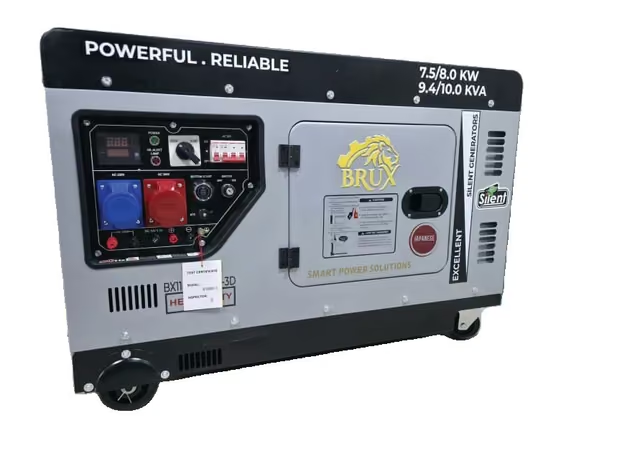
| Brux BX11000DSE3-3D | 9.4 kVA | electric, button and remote control | 36 Ah | 5-in-1 display |
| Brux BX16000DSE3-3D | 15 kVA | electric, button and remote control | 45 Ah | 5-in-1 display |
| Perkins-engined sets | 13 to 2,000 kVA | electric | not stated | Deep Sea DSE6010 (DSE8610 on one model) |
“Not stated”: the data sheet does not give the battery capacity. Exception: one of the two 1,000 kVA sets, the one with the Perkins 4008-TAG2A engine, uses a Deep Sea DSE8610 controller. Example data sheets: the 100 kVA set with the 1104C-44TAG2 engine, the Brux BX6500DSE and the Brux BX11000DSE3-3D.
Why does my generator start and then stall?
A set that stops after a few seconds, or as soon as the load is connected, is short of fuel, overloaded or has been shut down by a safety device.
- Fuel flow is restricted. A half-clogged filter, or air or water in the line, still lets enough diesel through at no load. Under load the engine needs more and chokes.
- The load is more than the set can supply. The engine slows, the frequency drops, then the controller or the circuit breaker cuts out. Electric motors (pumps, air conditioners, compressors) draw several times their running current when they start. Example: the Brux BX11000DSE3-3D is rated at 7.5 kW, with a maximum of 8.0 kW for short periods. For continuous use, stay under 7.5 kW. This set is three-phase: its power is shared across three phases, about 2.5 kW per phase. One overloaded phase is enough to overload it. To check what you need, work out your generator size.
- An engine safety device has tripped. High engine temperature, low oil pressure or low oil level: the controller message tells you which. On a water-cooled set (our Perkins-engined sets), a dirty radiator or low coolant raises the temperature. On an air-cooled set (Brux, Bison), the cause is blocked cooling fins or air inlets. In both cases a poorly ventilated room makes it worse. Ventilation rules are in our guide to installing a generator safely.
If the engine keeps running but no power comes out, the generator's circuit breaker has probably tripped. Reduce the load before you reset it. If the breaker is on and there is still no voltage, the alternator or its voltage regulator may be at fault: call a technician.
Black, white or blue smoke: what does the colour mean?
The colour of the smoke narrows down the cause. These are general pointers: only a diagnosis confirms it.
| Colour | Common causes | What to do |
|---|---|---|
| Black | Overload, clogged air filter, injection fault, poor-quality fuel | Reduce the load and check the air filter. If it persists: technician |
| White | At start-up: unburnt fuel, and the smoke clears as the engine warms up; water in the diesel; coolant getting into the combustion chamber (water-cooled sets) | If it persists or the coolant level drops: stop the set and call a technician |
| Blue | Burning oil: oil level too high, long hours at very light load, internal wear | Check the oil level with the engine cold. If it persists: technician |
A short dark puff at start-up or when a large load switches on is common on a diesel. Continuous black smoke is not. In the dry season, dust clogs the air filter quickly. A set that is too large for its load also builds up carbon and unburnt fuel (wet stacking): see our guide to the underloaded generator.
What can you check yourself, and what should you leave to a technician?
Before any check, stop the set, set the controller to stop and let the engine cool. On a water-cooled set, never open the radiator cap while the engine is hot. No flames or cigarettes near the fuel.
You can check yourself:
- the fuel level and the position of the fuel valve;
- the emergency stop and the controller mode;
- the alarm message on the screen;
- the battery terminals: tight and clean;
- the oil level and, on a water-cooled set, the coolant level, with the engine cold;
- the condition of the air filter and any visible leaks;
- the connected appliances: unplug the largest ones before restarting.
Leave to a technician:
- the injectors and the injection pump;
- the wiring, the controller and its settings;
- the alternator, voltage and frequency;
- the transfer switch and the connection to the building's electrical panel;
- any alarm that comes back, and any persistent white or blue smoke.
Our team handles generator diagnosis and repair as well as scheduled maintenance. Most of these faults can be prevented: follow our generator maintenance schedule.
What information should you prepare before calling?
This information lets the technician plan the right parts:
- The brand and model, from the rating plate or data sheet: for example “Brux BX11000DSE3-3D” or “100 kVA set with a Perkins 1104C-44TAG2 engine”.
- The serial number.
- The running hours, if your display or controller shows them.
- The exact alarm message, as a photo.
- When the fault happens: at start-up, after a few minutes, or when an appliance is switched on.
- The colour of the smoke, with a photo or a short video that also records the sound.
- The last service: date, hour-meter reading and parts replaced.
- The site address.
Request a diagnosis or repair quote on WhatsApp: use the WhatsApp button on this website to send us this information and a photo of the screen, or write to us from the Contact page.
If the site cannot stay without power during the repair, ask about generator rental.
Frequently asked questions
Is black smoke at start-up normal?
A short puff, yes: it is common on a diesel engine. Black smoke that continues while the set runs points to overload, a clogged air filter or an injection fault.
Can I reset the alarm and restart?
Once, after noting the message and fixing an obvious cause, such as an empty tank or too much load. If the alarm comes back, especially for oil pressure or temperature, leave the set stopped and call a technician.
Why won't my standby generator start after weeks without a power cut?
The battery has often run down, or water from condensation has got into the stored fuel. A standby set should be run under load once a month, as our maintenance schedule explains.
Sources: data sheets of the generators sold by MK Energies & Services (Brux sets, Perkins-engined sets with Deep Sea controllers).
A question?
Our team answers on WhatsApp or through the contact form.
Products mentioned
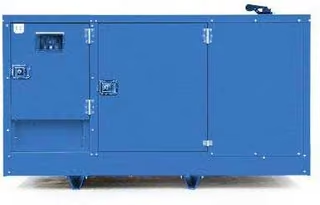
- Fuel at 100%
- 22.6 L/h
- Tank, soundproof
- 205 L
- Sound level
- 75 dBA
- Weight, soundproof
- 1,920 kg
- Soundproof or open skid
Price on request
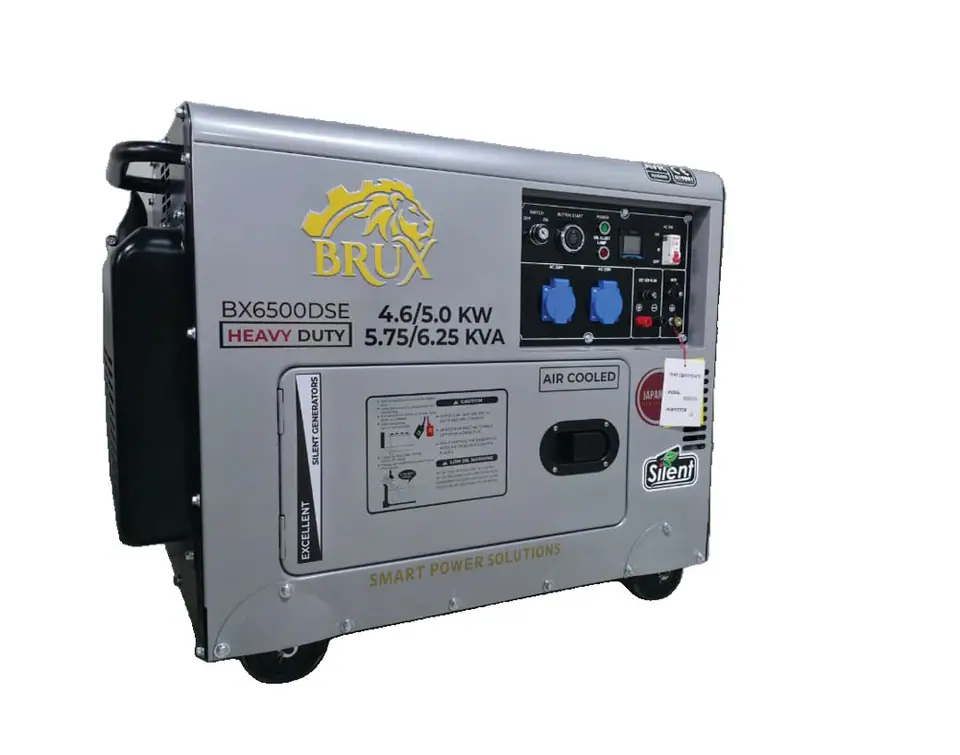
- Engine
- Diesel 186FA
- Voltage
- 220 V, single-phase, 50 Hz
- Starting
- Electric and remote
- Equipment
- 30 Ah battery, 3-in-1 display, ATS socket
- Air-cooled
Price on request
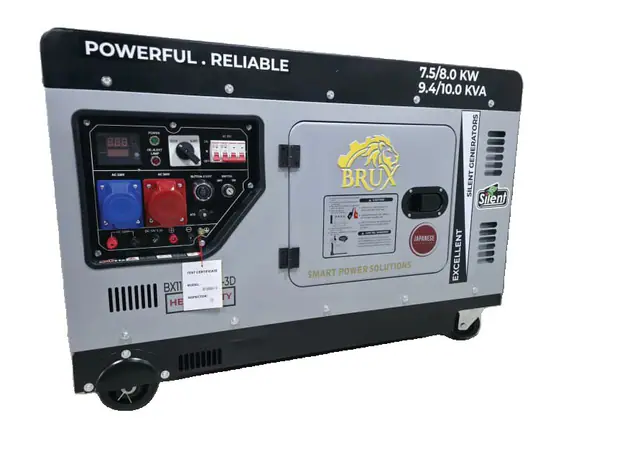
- Engine
- Diesel 688FG
- Voltage
- 220/380 V, three-phase (balanced), 50 Hz
- Starting
- Electric and remote
- Equipment
- 36 Ah battery, 5-in-1 display, ATS socket
- Air-cooled
Price on request
Related categories